For the week of June 8, 2026.
On June 8, 2007, the Government of Canada designated the Alouette 1 Satellite Programme a national historic event. In 1962 Canada became the third country in the world to design and build its own satellite, after the United States and the Soviet Union. Alouette 1 had an innovative design and helped expand scientific understanding the Earth’s atmosphere.
In 1958, as humans were just starting to explore space, the National Aeronautics and Space Administration (NASA) in the United States called for international cooperation. In response, the Defense Research Board of Canada proposed the construction of a scientific satellite in Ottawa. In 1959 NASA agreed to transport it into orbit once completed. Physicist John H. Chapman oversaw the design and construction of what became known as Alouette 1 at the Defense Research Board.
Alouette 1 was designed to facilitate scientific exploration of the ionosphere. This layer of the atmosphere is located 50 to 1,000 kilometres above the Earth’s surface. It is made of atoms charged by energy from the sun and cosmic rays. These charged atoms reflect radio waves back to Earth, allowing long-distance radio communication. They also protect life on Earth by absorbing harmful solar radiation.
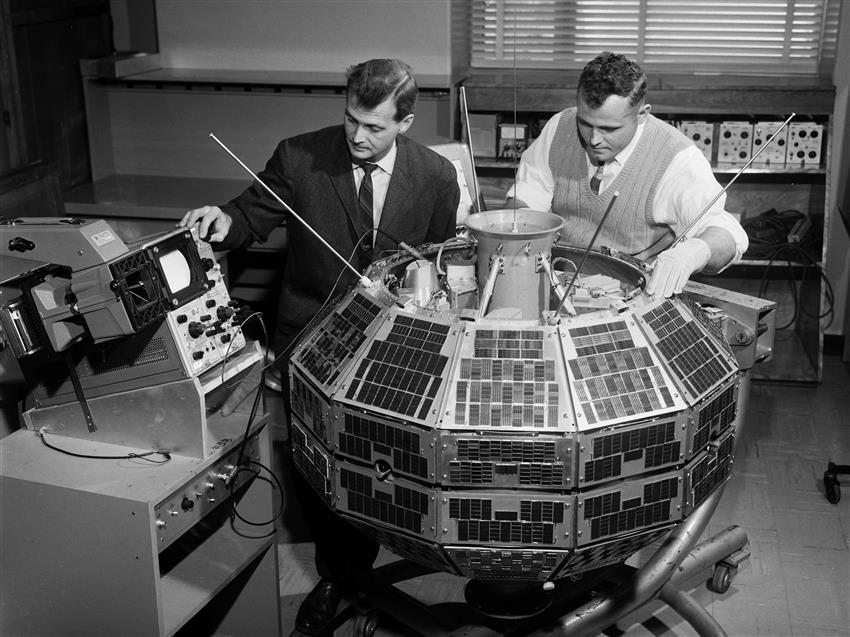
At the time, scientists were still trying to figure out which technologies were best suited for outer space. Alouette 1 featured innovative new technologies. The surface was completely covered with solar cells, so that it always had power. Those solar cells were made of a special glass that filtered out infrared light that would overheat the satellite. The design also featured a new type of extremely durable, extendable antenna, which deployed in orbit. It worked so well that this type of antenna was used on almost every Canadian and American satellite for the next two decades, and were included in the design of Mercury, Gemini, and Apollo capsules. All elements of the Alouette 1 underwent extensive testing at numerous facilities to ensure that the satellite could endure the violent vibrations of the launch, as well as the extreme temperatures and radiation of space.
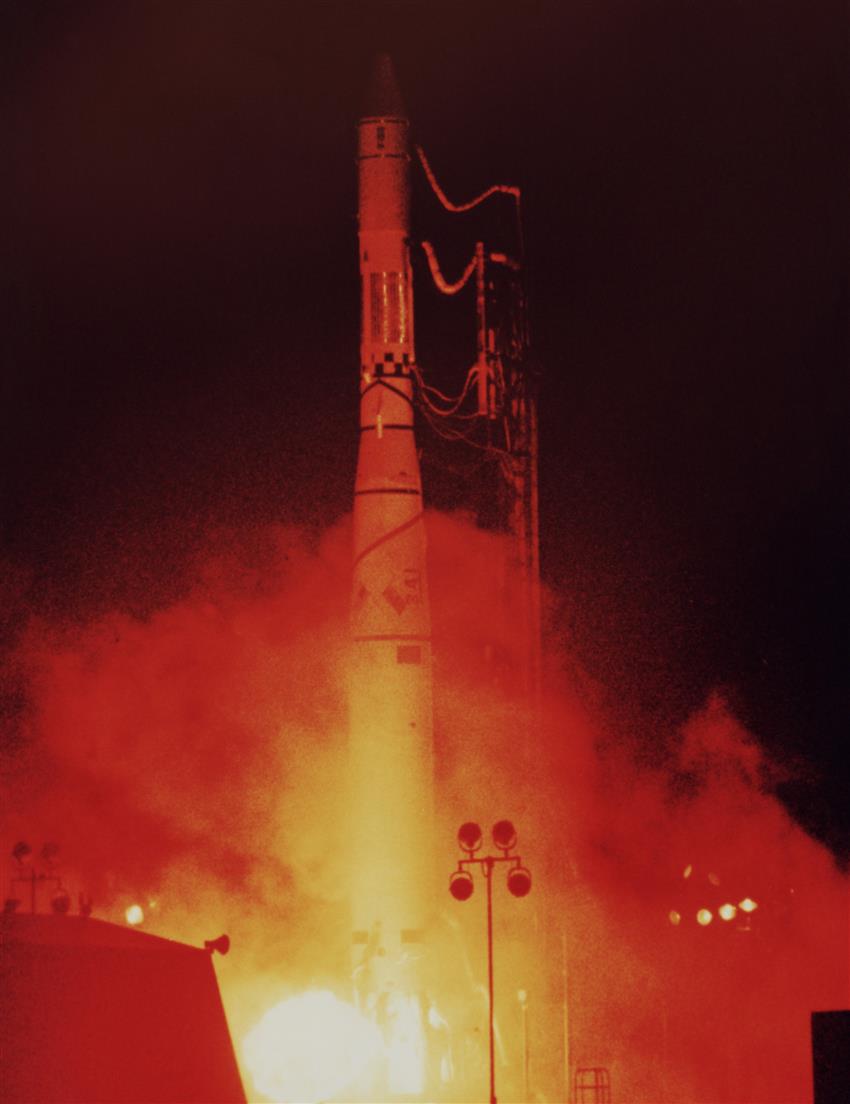
After three and a half years of planning and preparation, Alouette 1 was completed on schedule at a cost of about $3 million. In the late summer of 1962, the satellite was transferred to Vandenberg Air Force Base in California, where it underwent final inspections. Finally, on September 29, NASA launched Alouette 1 into space aboard an American Thor-Agena B rocket.
The career of Alouette 1 exceeded all expectations. Initially, the satellite had a three-month mission and a predicted lifespan of one year. However, it continued to function and collect valuable data until decommissioned in 1972. Over its decade in space, Alouette 1 expanded scientific knowledge of the ionosphere, including its impact on Earth and the processes that lead to its formation. The data provided by the satellite led to the publication of more than 1,200 scientific papers and reports around the world.
The success of Alouette 1 established Canada as an important player in space exploration. Together, the Defense Research Board of Canada and NASA would launch three more satellites over the next decade: Alouette 2 in 1965, ISIS 1 in 1969, and ISIS 2 in 1971. The experience gained by designing Alouette 1 also helped Canada design commercial communications satellites.