
Continuous Improvement Program — 2023 to 2024 Annual Report
Annual evaluation
Twenty-four randomly selected impact assessments are evaluated each year to see how well they meet the Effective, Efficient and Compliant expected results of the Parks Canada Directive on Impact Assessment. Together, these scores act as an overall indicator for Parks Canada’s Impact Assessment Program. The 2023-24 scores in each category were:
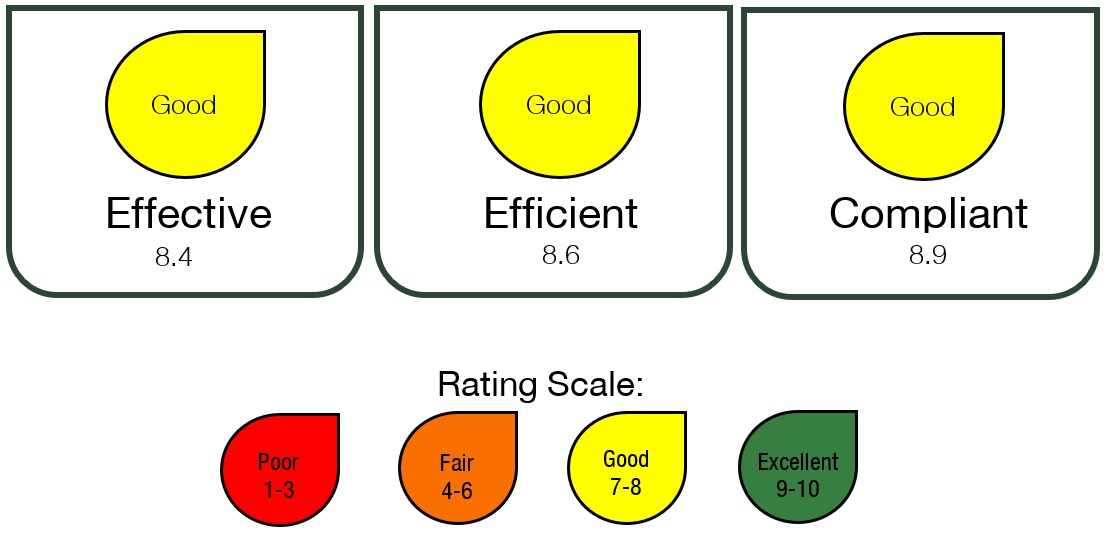
Figure 1. Annual review rating scale and results — text version
This is an infographic of the score results for the 2023-2024 annual report. The infographic includes a rating scale situated at the bottom center of the visual. The rating scale includes 4 teardrop shaped icons that indicate the different scores utilized in the report. Starting on the left, the teardrop icon outlined in black and with a background in red, identifies a Poor rating with a score between 1 and 3. Moving to the right, the second icon outlined in black and with a background in orange, identifies a Fair rating with a score between 4 and 6. The next teardrop situated to the right of the orange icon, is outlined in black with a background in yellow, identifies a Good rating with a score of between 7 and 8. The last teardrop icon found to the far right of the rating scale is outlined in black with a green background. The green icon identifies an Excellent rating score between 9 and 10. Above the identified rating scale are the results of the 2023-2024 annual report organized into three categories situated in three separate boxes. Starting on the top left side, is a medium size box with the two top corners squared and the two bottom corners rounded. The box has a dark green outline and a transparent background. All three boxes are shaped the same and have transparent backgrounds with a dark green outlining the borders. Within the first box situated on the left, there is a yellow teardrop indicating a Good rating according to the identified rating scale, situated in the top-centre. Below the yellow icon, in black bold writing the category of Effective is identified and below this is the rating of 8.4 for this category. The second medium sized box is situated in the center of the visual. Within the box, a yellow teardrop icon indicating a Good rating scale is situated in the top-center. Just below the yellow icon, the category is identified in black bold writing as Efficient. Below the identified category is a score of 8.6. The last green outlined box of the three, situated to the right of the visual, includes a yellow teardrop icon indicating a Good rating according to the rating scale. Below the yellow icon written black and bold is the identified category Compliant. Lastly situated below the identified category within this box is the rating score of 8.9.
Highlights from 2023 to 2024
- Highest scores since starting the program in 2018
- Impact assessment (IA) pathways were selected with a high level of accuracy
- IA reports were written efficiently, with noticeable improvement in depth of analysis
- High policy and legislative compliance with some gaps
- Improvements needed in the analysis of residual effects, and documentation of surveillance and follow up monitoring requirements
Key recommendations
Improve training
Key findings from the Annual Evaluation will be integrated into the "Preparing Effective Impact Assessment" training course, specifically within Module 4, which focuses on residual effects analysis.
Expand tools
New resources will be added to the Project Information Exchange Toolkit to support stronger policy compliance and improve IA processes.
Key investigation
The topic of the 2023 to 2024 Key Investigation was external projects. Between 2018 and 2024, Parks Canada reviewed approximately 1000 IAs for external projects in 18 field units across the country. The goal of the key investigation was to get a comprehensive national perspective on how external projects are managed; and inform the development of consistent process, guidance, and tools for external project reviews across Parks Canada.
The key investigation included an analysis of annual evaluation scores of internal and external projects over the 5-year period (2018 to 2024), and a survey distributed to all Impact Assessment Practitioners in field units.
Highlights of Annual Evaluation Analysis
- Over a five-year period, assessments conducted by external proponents and consultants consistently fell below Parks Canada’s standards
- While Parks Canada’s own IAs consistently achieved “good” ratings (7-8), external assessments were rated “fair” (4-6) on average
- Key areas for improvement were the surveillance and follow-up monitoring requirements, which are essential for ensuring compliance and mitigating environmental impacts
- These findings highlight the need for better guidance to improve the overall quality of external impact assessments
Insights from field unit surveys
- Parks Canada IA practitioners identified key gaps and opportunities to improve efficiency and effectiveness of the regulatory review process for external projects, as well as the quality of external impact assessments
- Key challenges when working on external projects were:
- a lack of clear leadership in managing external project reviews, leading to uncertainty around roles and responsibilities
- the need for a standardized approach within field units to ensure consistency in reviews
- submissions from proponents often failing to meet Parks Canada’s requirements, slowing the process
- Respondents highlighted the importance of a consistent approach to external project reviews to improve efficiency
- Strong leadership and management oversight were also cited as crucial for streamlining regulatory reviews
- On the success side, practitioners pointed to good relationships, open communication, and clear guidelines as major contributors to effective project assessments
- Overall, the findings emphasize a need for improved processes and collaboration to strengthen external project reviews and ensure consistency across all Parks Canada field units
Key recommendations
Share key findings
Communicate results from the key investigation to staff involved in external project reviews, to address gaps and identify areas for improvement.
Establish best practices
Develop and share a set of best practices, emphasizing clear roles and responsibilities, standardized review processes, and optimal use of National Office resources.
Improve guidance and tools
Update guidance, tools, and templates tailored to external projects, ensuring proponents have the necessary resources to improve the quality of their impact assessments.
- Date modified :