
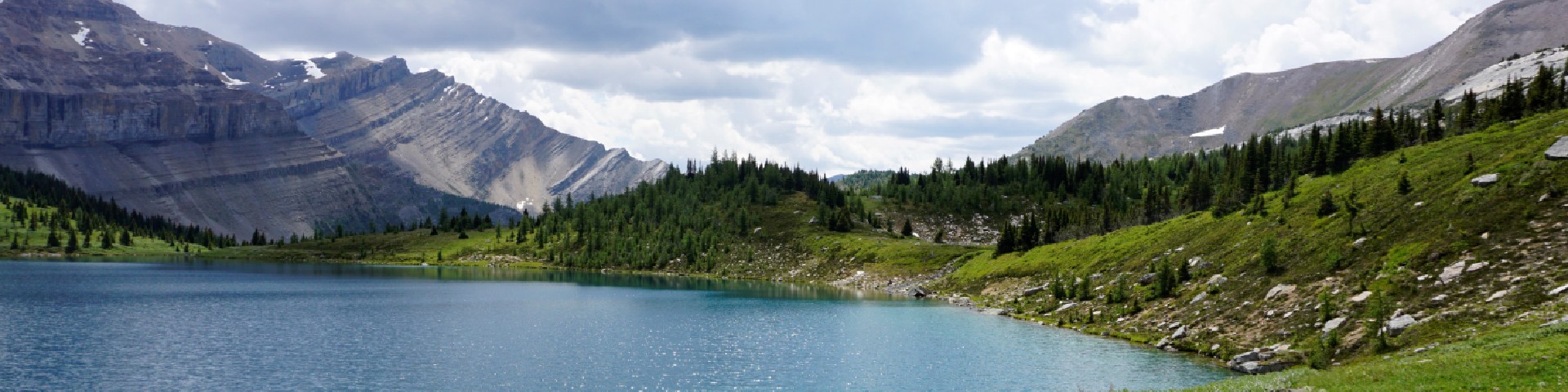
Hidden Lake
Banff National Park
Parks Canada is restoring critical habitat for westslope cutthroat trout in Banff National Park. These fish once lived in abundance in the cold, fresh waters of Hidden Lake. Now, the Alberta population is listed as threatened under the Species at Risk Act.
Following years of restoration work, the project reached an important milestone in 2026 when reintroduced westslope cutthroat trout were observed spawning naturally in Hidden Lake for the first time.
In the early 1900s, Parks Canada stocked many mountain lakes with non-native fish to provide recreational fishing opportunities. Species such as brook trout and rainbow trout became established and displaced native fish. Although Parks Canada no longer stocks lakes with non-native fish, these historical introductions continue to impact aquatic ecosystems today. Restoring native fish populations is an important part of protecting the ecological integrity of Banff National Park.
Westslope cutthroat trout are a species at risk for several reasons:- Displacement by non-native fish
- Competition with brook trout for resources
- Hybridization with rainbow and Yellowstone cutthroat trout
- Loss and damage to stream habitat
- Increasing water temperature and other factors related to climate change
Parks Canada‘s four step process to save threatened trout:
1. Identify secure habitat
The ideal restoration area for westslope cutthroat trout has cold, clean water with suitable spawning grounds and a barrier downstream to stop non-native fish from swimming upstream into the restored habitat. Hidden Lake, in the Skoki area, meets these criteria and once had a thriving population of westslope cutthroat trout.
2. Remove non-native fish
Before introducing westslope cutthroat trout, aquatic staff needed to remove non-native brook trout from the lake.
2011 – 2017
Aquatic staff worked hard to rid Hidden Lake of non-native brook trout through angling, gill netting and electro fishing. None of these manual removal techniques were effective.
2018 – 2019
With the help of partners, the aquatics staff treated Hidden Lake with rotenone twice. Treatment took place over one day each year. Staff stayed on site for about a week to ensure rotenone levels had safely decreased. They applied a neutralizing agent that works alongside rushing water and sunlight to breakdown rotenone.
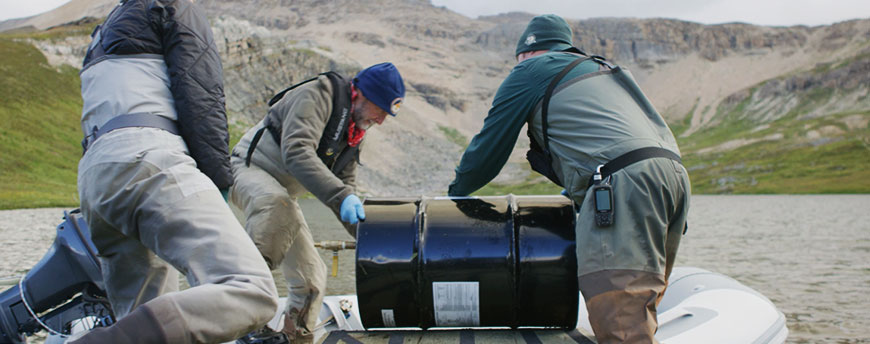 eDNA:
eDNA:
Living organisms constantly shed genetic material in the form of DNA. The material, called environmental DNA or eDNA, lingers. It can be collected with water samples rather than directly from the organism. eDNA sampling along with physical monitoring (angling, netting, electro fishing) can help tell us if non-native species are present.
Monitoring showed that all non-native fish were removed and healthy insect and zooplankton populations – food for fish – remained. The reintroduction of westslope cutthroat trout could begin!
3. Reintroduce westslope cutthroat trout
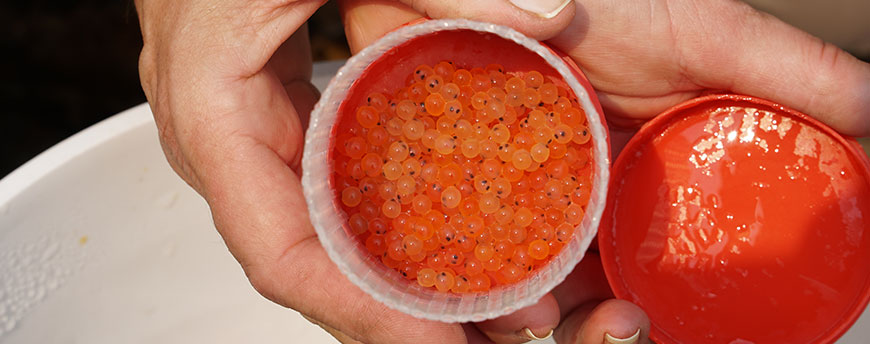 Why remote streamside incubation?
2026
Parks Canada has reached an important milestone in the restoration of Hidden Lake. For the first time, reintroduced westslope cutthroat trout were observed spawning naturally in the lake. These fish originated from eggs collected and reared by Parks Canada in 2021 and 2022 before being reintroduced to Hidden Lake and its tributaries.
Successful spawning is an important milestone for the project. It demonstrates that Hidden Lake once again provides the habitat conditions needed for westslope cutthroat trout to complete their life cycle and is an important step toward establishing a self-sustaining population.
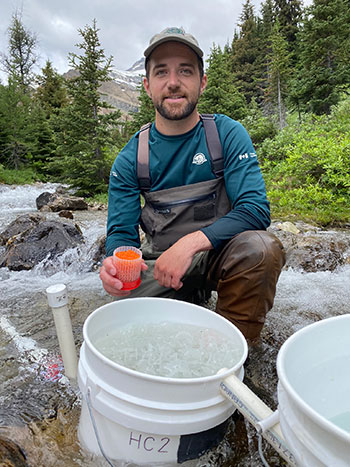
Remote streamside incubation helps ensure survival of fertilized eggs for several reasons:
- Allows newly hatched fish to adapt to their natural environment at the start of their lives
- Prevents the fry from becoming habituated to the hatchery environment
- Protects them from the dangers of transport
An incubator for the mountain parks
Parks Canada's incubation trailer now allows westslope cutthroat trout eggs to be fertilized and incubated within the mountain national parks, reducing handling time and eliminating the need for an external hatchery. The trailer supports restoration projects across Banff and Yoho national parks.
4. Monitor success
Moving forward
Parks Canada will continue monitoring the restored population to evaluate its long-term health and reproductive success. Following the first observation of natural spawning in 2026, the project has reached an important milestone toward establishing a healthy, self-sustaining population of westslope cutthroat trout in Hidden Lake.
Why all the fuss about fish?
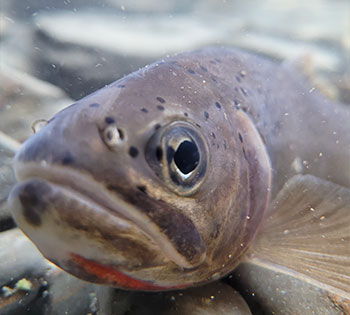
Protecting species at risk and restoring aquatic ecosystems are priorities for Parks Canada.
- Westslope cutthroat trout are a fussy fish or what we call an indicator species. They thrive in cold, clean and unpolluted waters. A healthy population helps to indicate a healthy ecosystem.
- Healthy aquatic ecosystems are integral to the health of the whole ecosystem.
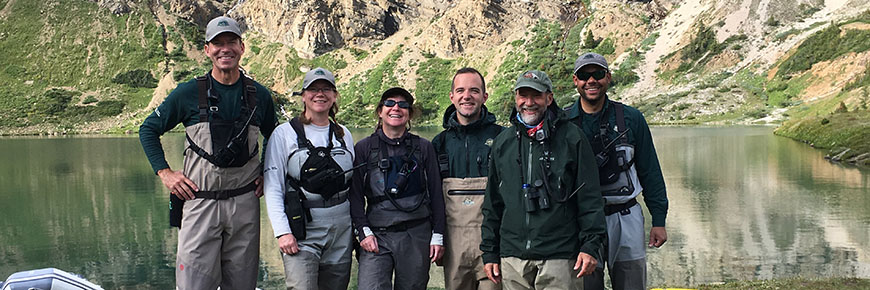 2018 Hidden Lake, From left to right: Geoff Skinner Jasper NP, Lisa Larson Mt Revelstoke and Glacier NP's, Jennifer Earle Alberta Environment and Parks (AEP), John Jimmo Lake Louise Yoho and Kootenay NP, Dr. Mike Sullivan AEP, Paul Harper Waterton NP
Stay on this journey with Parks Canada as we protect and restore habitat for species at risk.
For more information, contact pc.llykaquatics-aquatiquesllyk.pc@pc.gc.ca
- Date modified :