
VIP (Very Important Permafrost)
Wapusk National Park
Did you know that much of the land in Wapusk National Park never thaws? Known as permafrost, this ground stays frozen all year long. Ice cold and rock-hard means that permafrost creates a solid base for the tundra of Wapusk – just like the foundation of your house. Atop this frozen foundation you’ll find the peat banks polar bears use for dens and the gravel beach ridges caribou use for migration to their calving grounds in Wapusk.
In the north where climate change is accelerating, permafrost is at risk of thawing and forever changing the landscape of sub-arctic tundra, like that found in Wapusk! Not only is permafrost a fascinating natural occurrence, understanding its health tells us lots about the health of the park overall.
Hello, Old Friend: The Winkie Drill
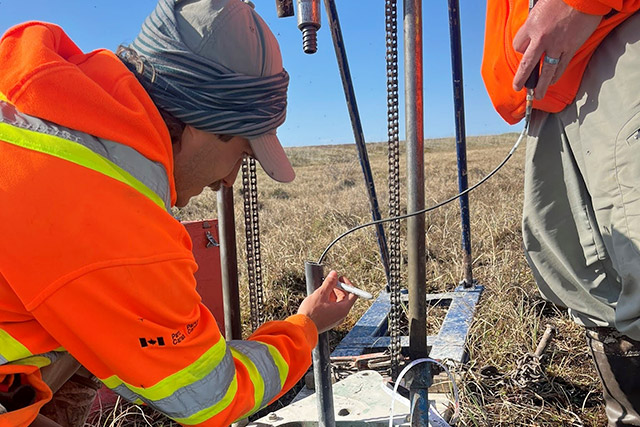
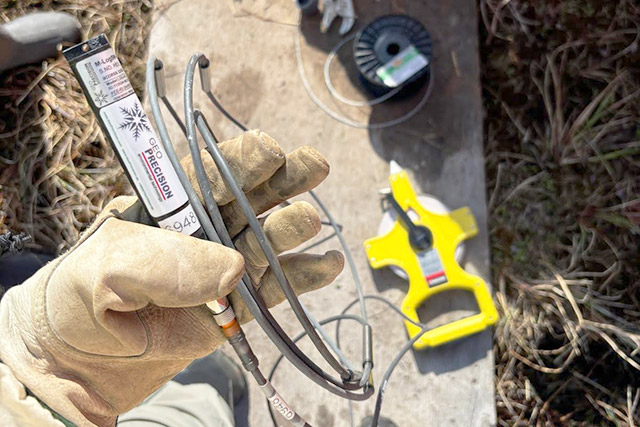
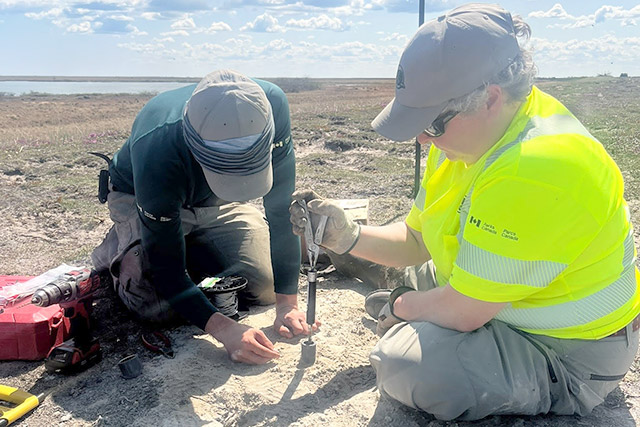
Checking the health of permafrost isn’t as easy as sticking a thermometer in the ground… but it is similar! One way to monitor the health of the permafrost is by using a drill to create a small hole, known as a “well”, and inserting a cable with sensors down the well. The sensors then transmit regular readings to the Parks Canada team who can then monitor and assess the health of Wapusk’s permafrost. This sensor provides measurements from the top of the well to the bottom, allowing scientists to track changes in-ground temperature and how deep the permafrost goes.
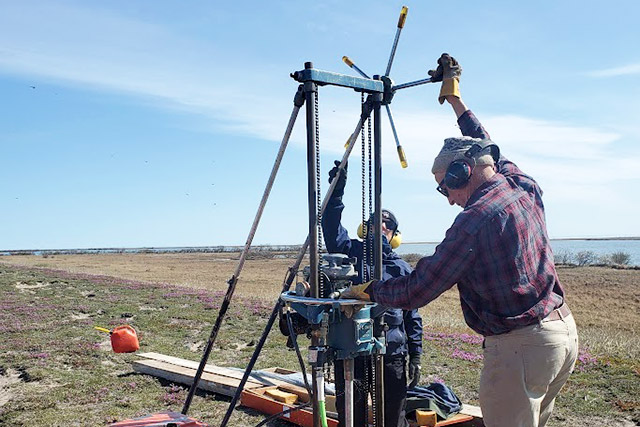
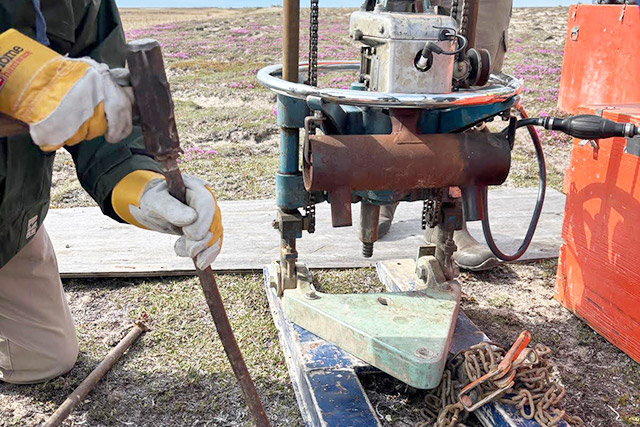
Now, you can’t just use any old drill to drill into permafrost! A special drill, called a Winkie Drill, was used by Larry Dyke and Wendy Sladen from 2007-2009 to install permafrost wells and sensors in both coastal and wetland areas of the park.
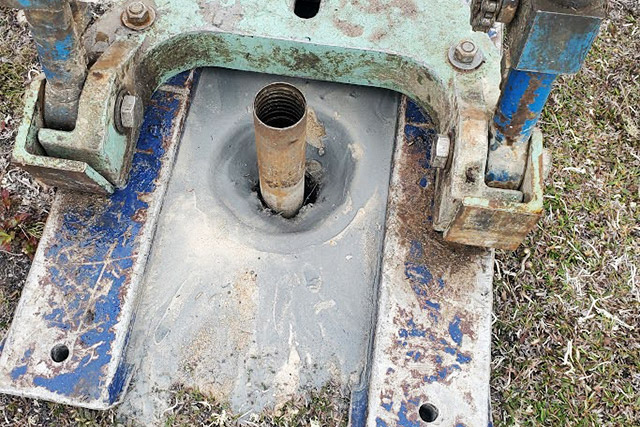
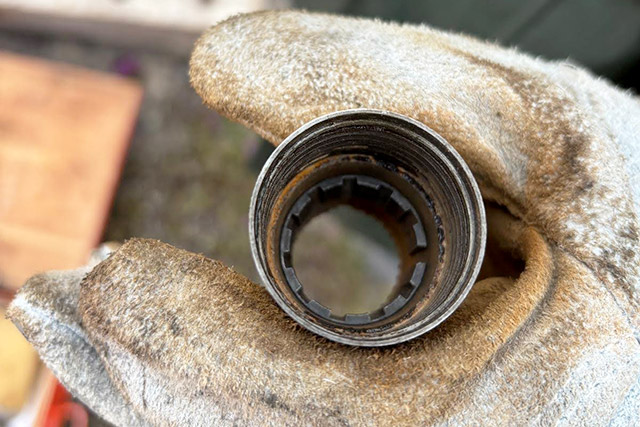
But how does a Winkie Drill work exactly? Good question! Unsurprisingly, the main part of the drill works just like a regular drill, quickly spinning and boring a hole in the earth. What’s special about the Winkie Drill is the metal casing surrounding the drill that supports the walls of the well as it drills deeper and deeper. To protect the drill and the permafrost, water is pumped into the well as it’s being drilled, clearing away debris and helping to cool the drill and permafrost surrounding it.
Once drilled, the cable with sensors is placed down the well. Previously, the cables attached to the sensors were exposed above ground, but the playful polar bears of Wapusk got curious and damaged these fun new “toys” rendering the coastal wells inoperable.
(Perma)frosting on the Cake of Retirement
After retiring, Larry donated the Winkie Drill to the Churchill Northern Studies Centre (CNSC), where in 2010, the drill was crated and stored. Fast forward a few years and Larry, not one for a quiet retirement, reached out to the CNSC to see if he could come and get the drill operational again. After an initial attempt to get the drill operational in 2024, Larry knew which parts he needed to get the drill running again. In 2025, the Parks Canada team invited Larry to come up to Churchill to make the final repairs and put the drill to use.
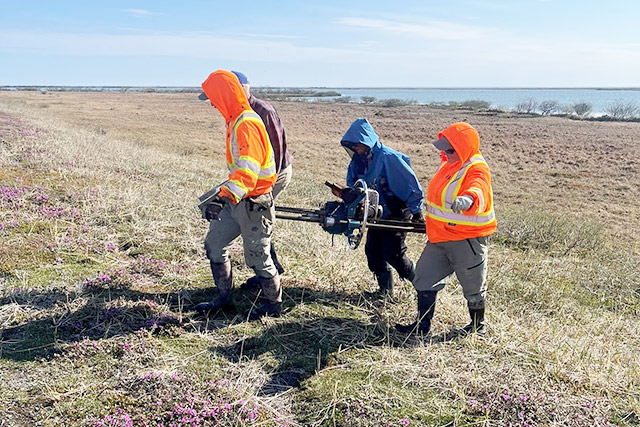
With a functional Winkie Drill, permafrost in need of monitoring, and a dedicated volunteer willing to share his wealth of knowledge, it was time to head back out on the tundra and drill more wells!
Full Circle Moment
We can sometimes think of conservation as a straight line, but often it’s more like a circle! Through changes in technology, knowledge sharing, and learned experience, we can evolve how conservation work is done, returning to old methods and refining them.
In June 2025, 16 years since his last drilling trip in Wapusk, Larry and the Winkie Drill joined the Parks Canada team for a four-day trip to drill new permafrost wells.
A couple helicopter loads of supplies and people later, the team got to work on drilling new wells and installing the new sensors. The big difference this time? Hiding the cables for the sensors underground so our polar bear friends can’t get to them!
With two new wells drilled, and sensors installed, the team will be able to gather important data on the health of Wapusk’s permafrost. Parks and protected areas in Canada are part of a “nature-based solution” to climate change, as healthy ecosystems help nature and people adapt to climate change. These places conserve biodiversity, protect ecosystem services, connect landscapes, take up and store carbon, build knowledge and understanding, and inspire people.
Related links
- Dr. Doug Clark on change
- Dr. Doug Clark on dens
- Dr. Doug Clark on cameras
- Evan Roberts
- A Day in the Life – Cracking the code with eDNA
- Environmental DNA helping Parks Canada establish...
- Love, Loss, and Raptors
- A Day in the Life – Goose Banding
- Pick of the Season: Blueberry Jam
- Pick of the Season: Cranberries
- Churchill is the Greatest: 3 more reasons Time Magazine was...
- Advice for your 30s from Wapusk National Park
- Cape Churchill Caribou Scat Collection
- Pick of the Season: Fireweed jelly
- Heather MacLeod on the Wapusk Youth Camp
- Pick of the Season: Labrador Tea
- Matt Webb
- Pick of the Season: Snow goose
- Join the Pod: 5 facts about beluga whales in Manitoba
- LeeAnn Fishback on wayfinding
- LeeAnn Fishback on weather
- Murray Gillespie
- She can dig it: Cultural Resource Management Advisor Sandra...
- Nancy Spence
- Dr. Robert Rockwell
- Russell Turner
- Sandra Hollender
- Dr. Wanli Wu
- Date modified :