
Terns
Sable Island National Park Reserve
Three species of terns breed at Sable Island National Park Reserve: the Common Tern, the Arctic Tern (Sterna paradisaea), and the Roseate Tern (Sterna dougallii).
On this page
- Morphology
- Behaviour
- Population fluctuations
- Species at risk
- Protection and management
- References
- Image gallery
Morphology
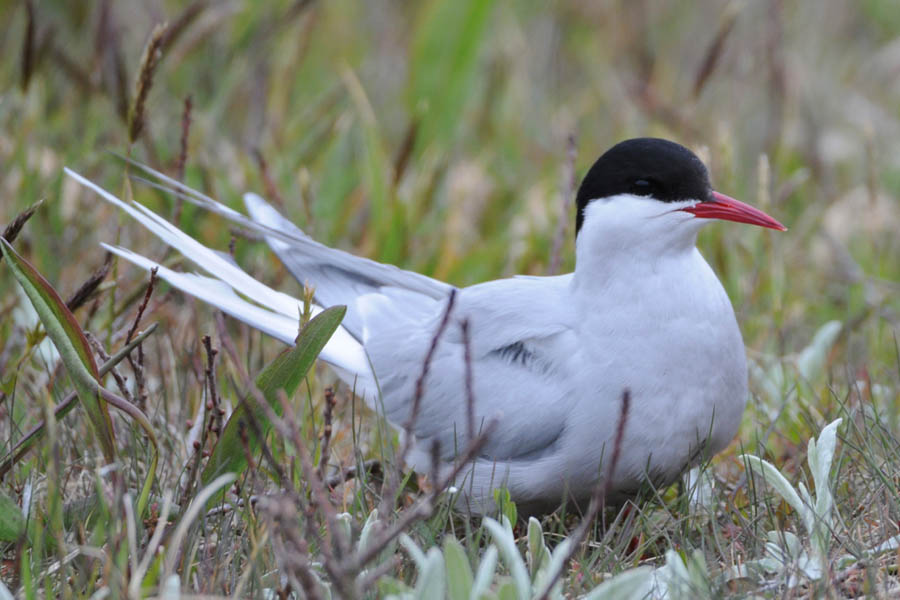
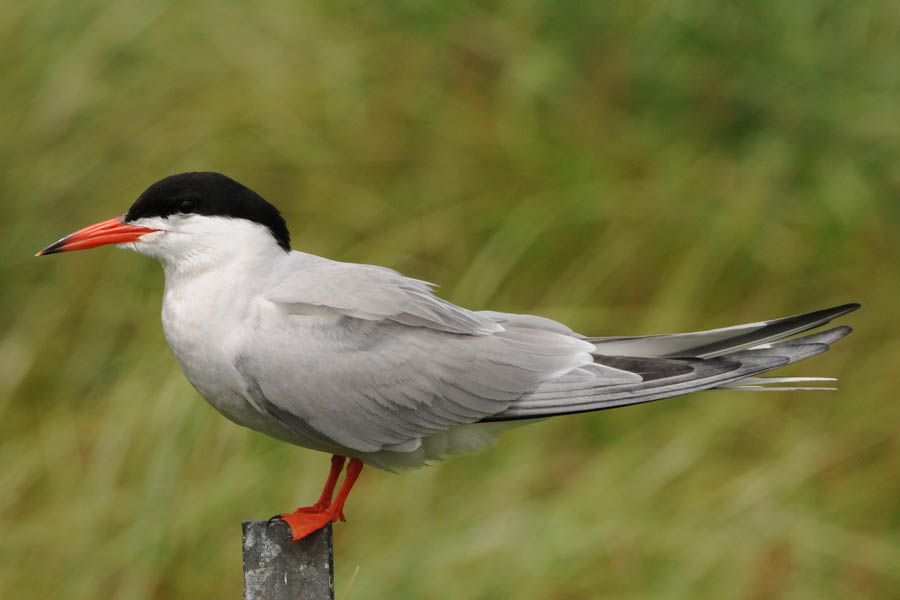
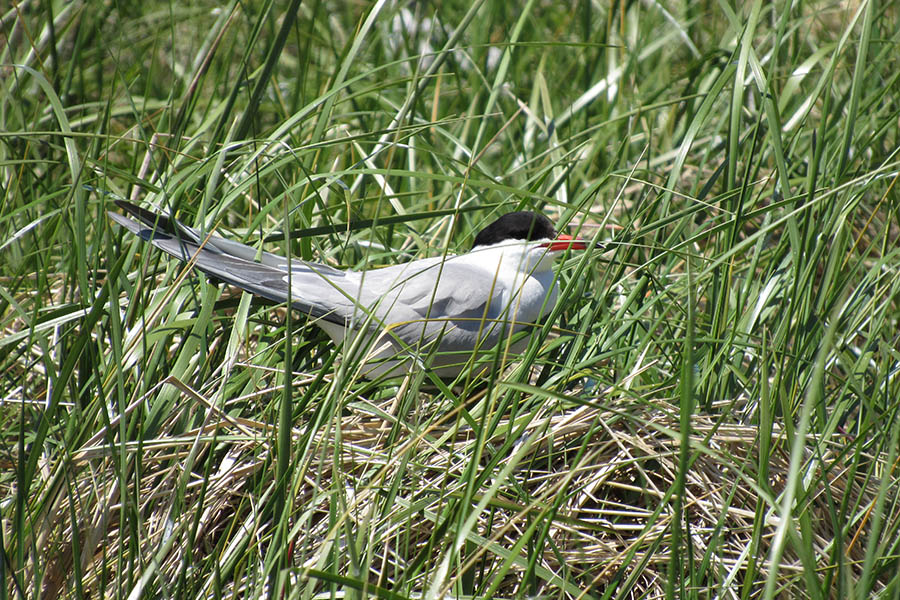
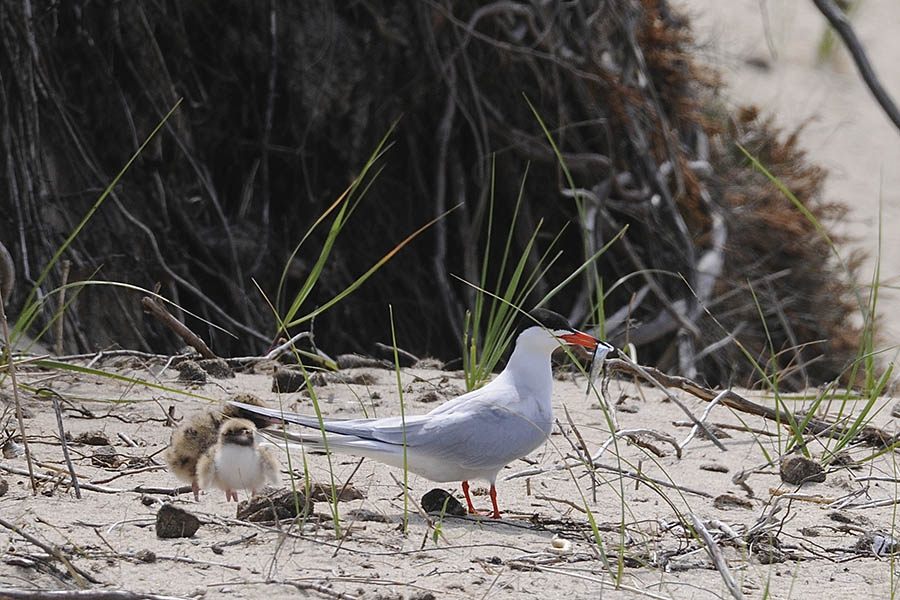
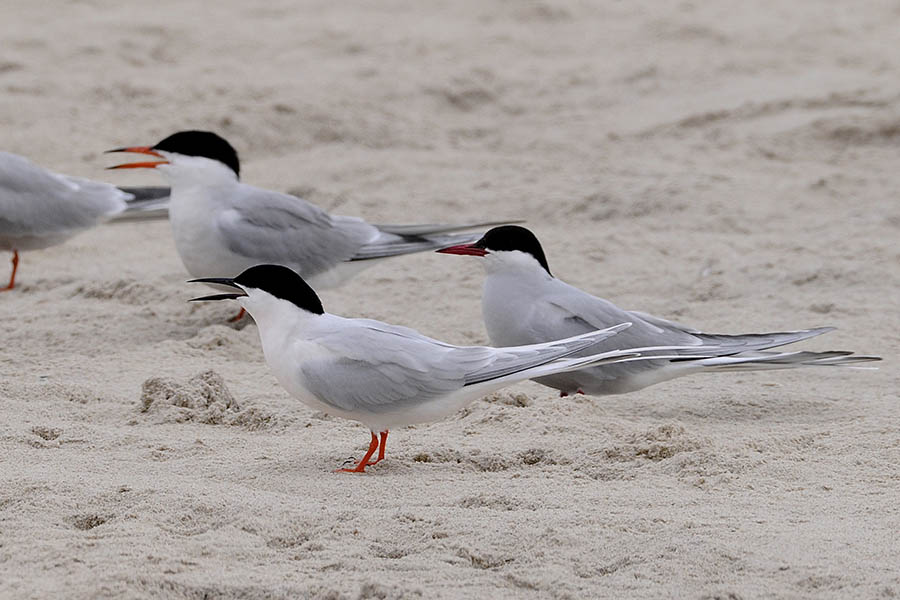
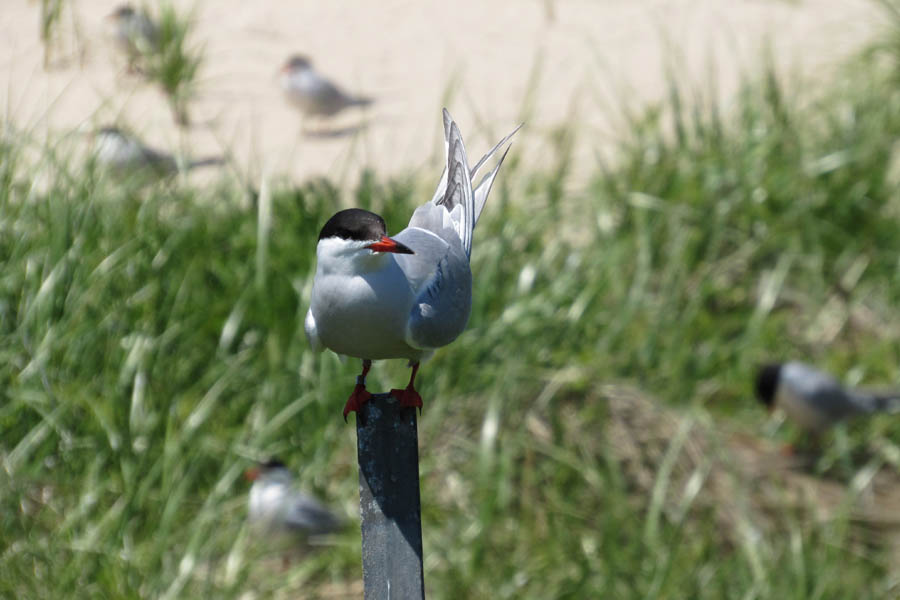
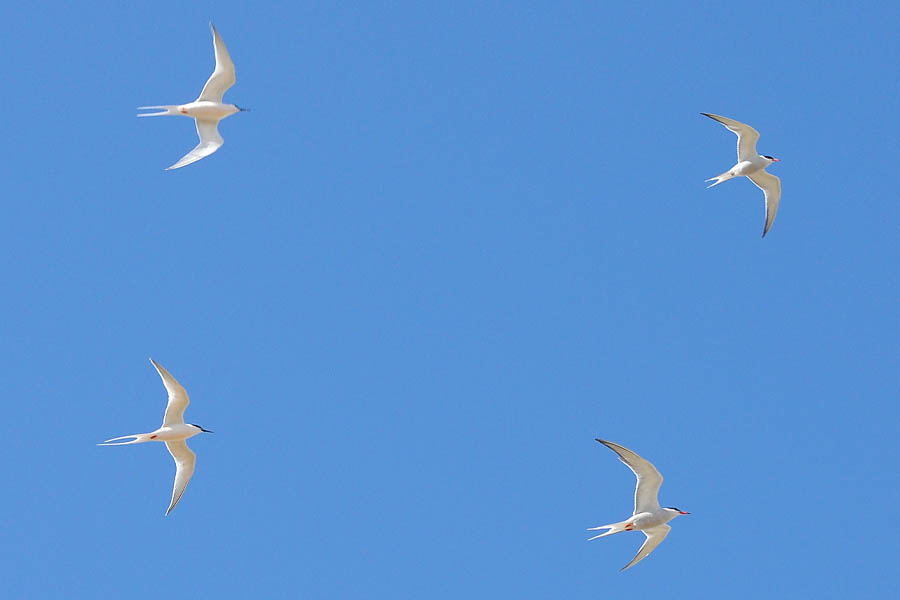
Terns often have light grey or white plumage and a grey breast. Nonbreeding terns are distinguishable by their black legs and bill, and a partially reduced cap. It can be difficult to distinguish between Arctic Terns and Common Terns because of their similar features.
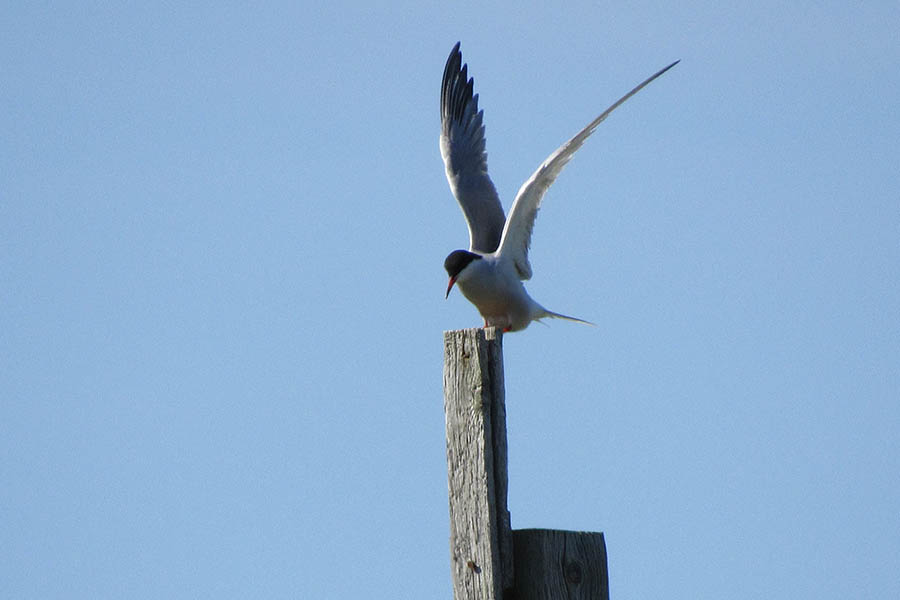
Arctic Terns are slightly smaller and have shorter legs and bill, smaller, rounder head, narrower wings, and steeper forehead. Arctic Terns have a completely red bill.
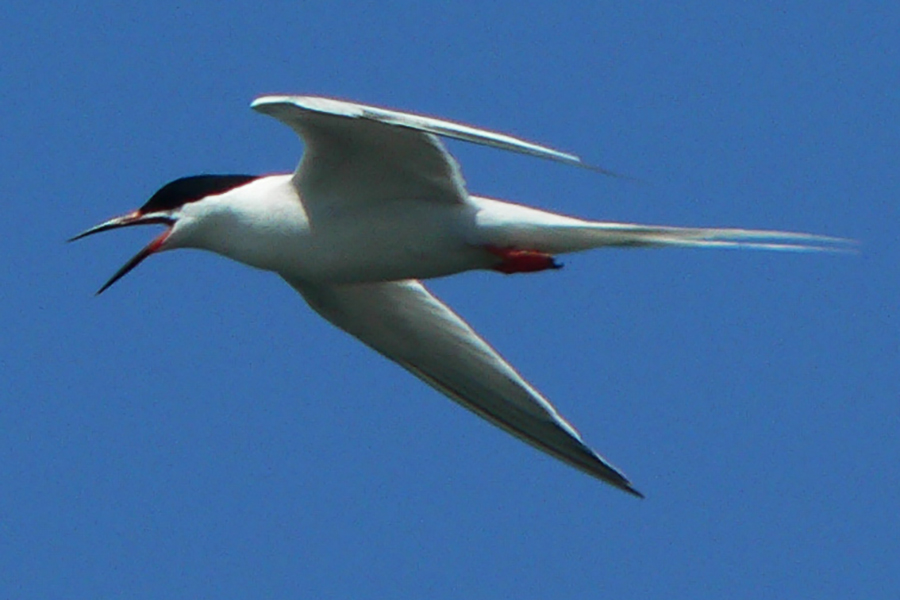
Common Terns have a red, black-tipped bill. Common Terns also have a lower pitch call than Arctic Terns.
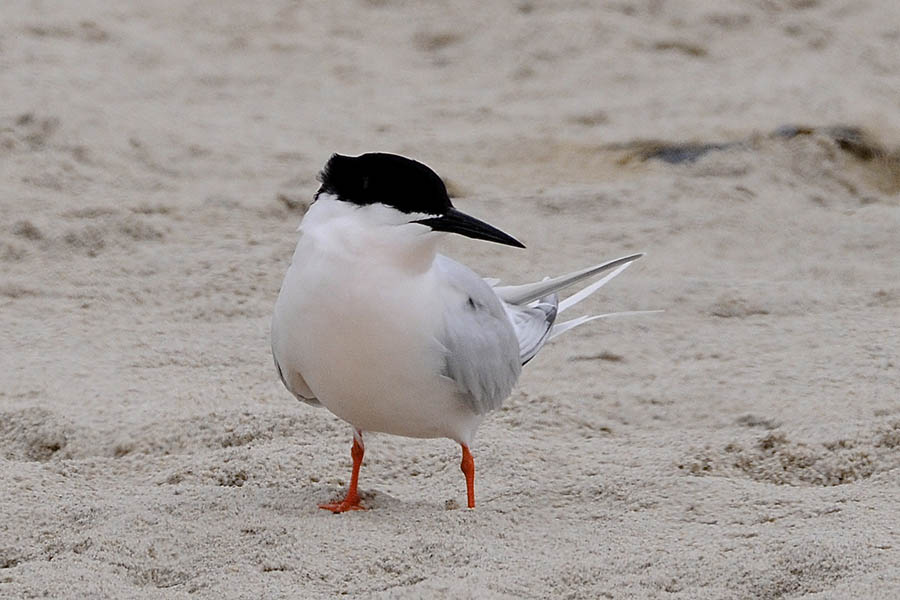
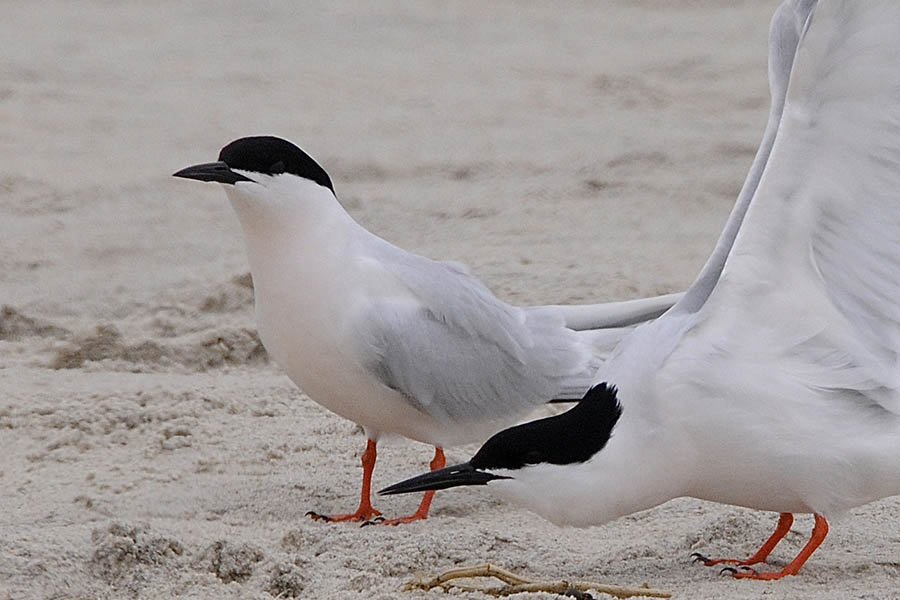
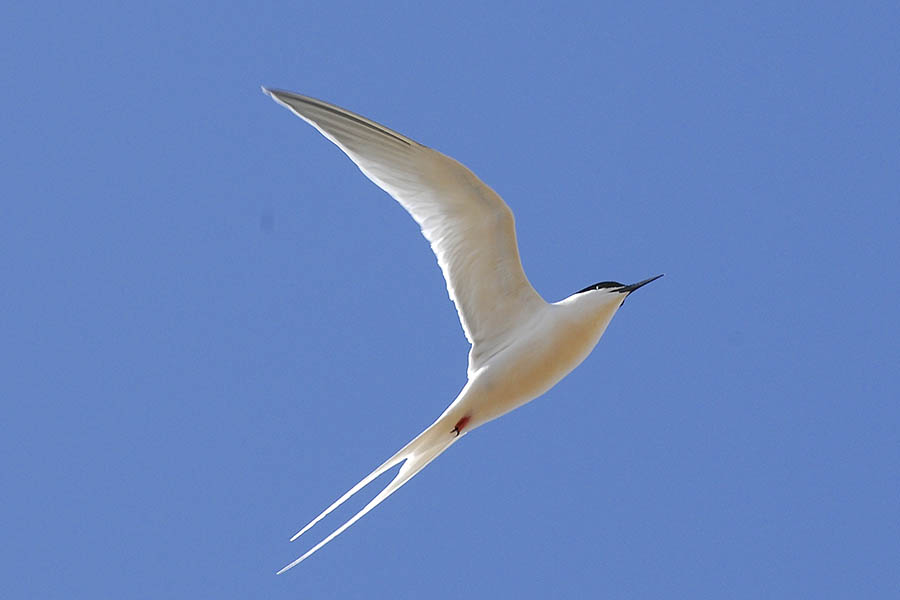
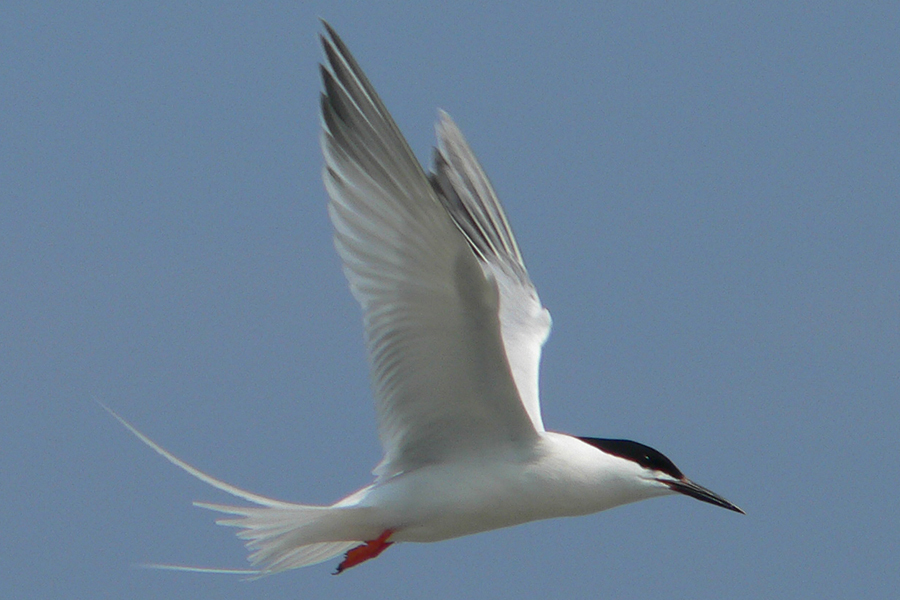
Roseate Terns have similar features to Common and Arctic Terns but have the longest tail and bill of the three species. Roseate Terns also have an entirely black bill and a pink wash on their breast, hence their name.
Behaviour
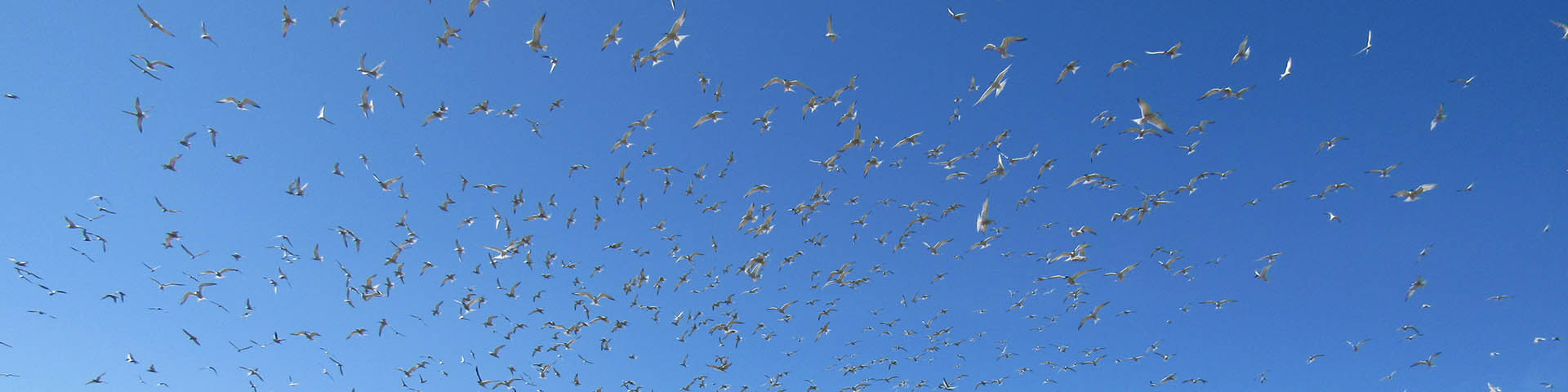
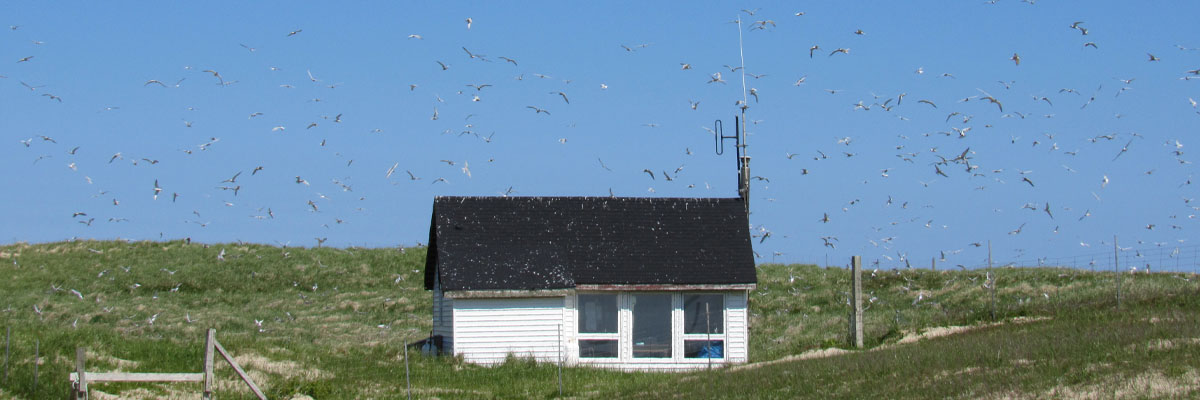
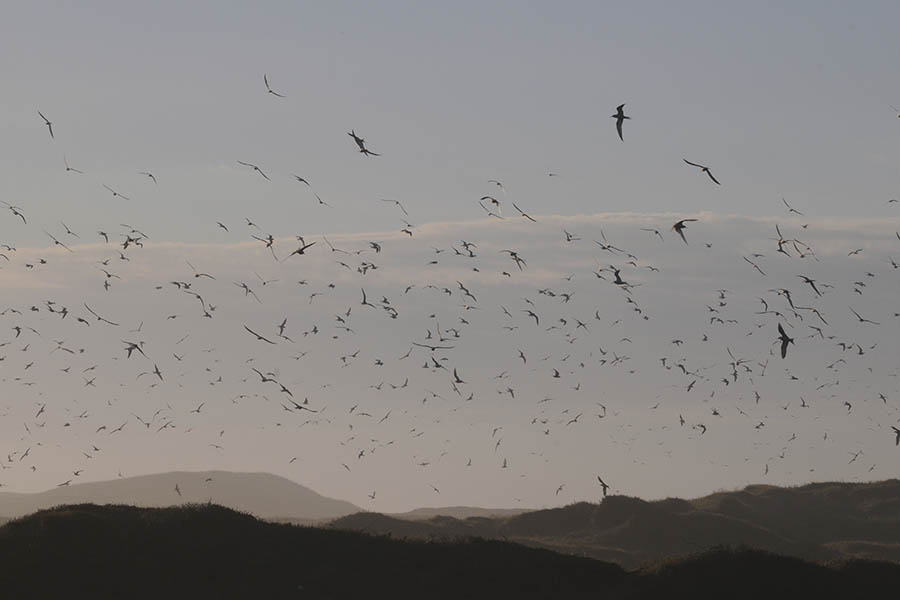
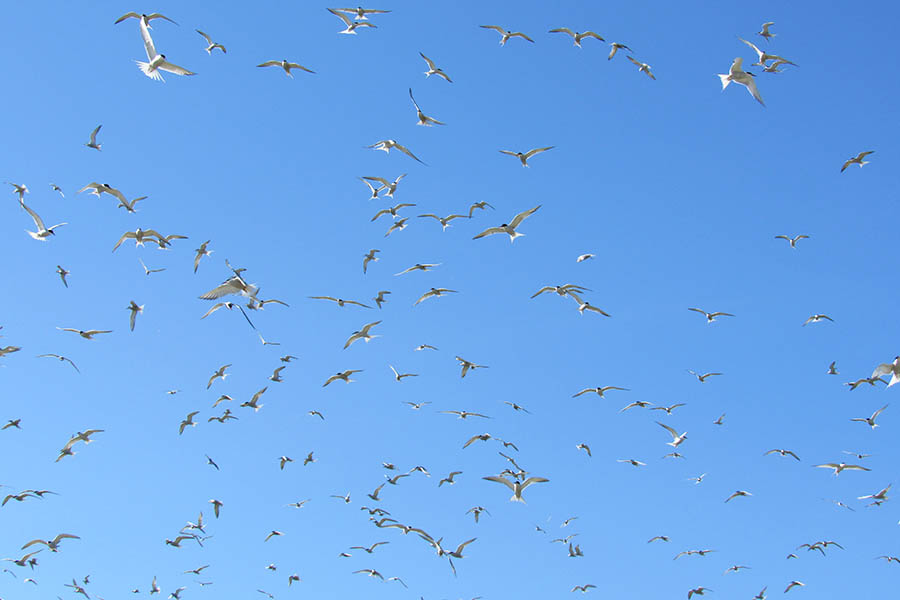
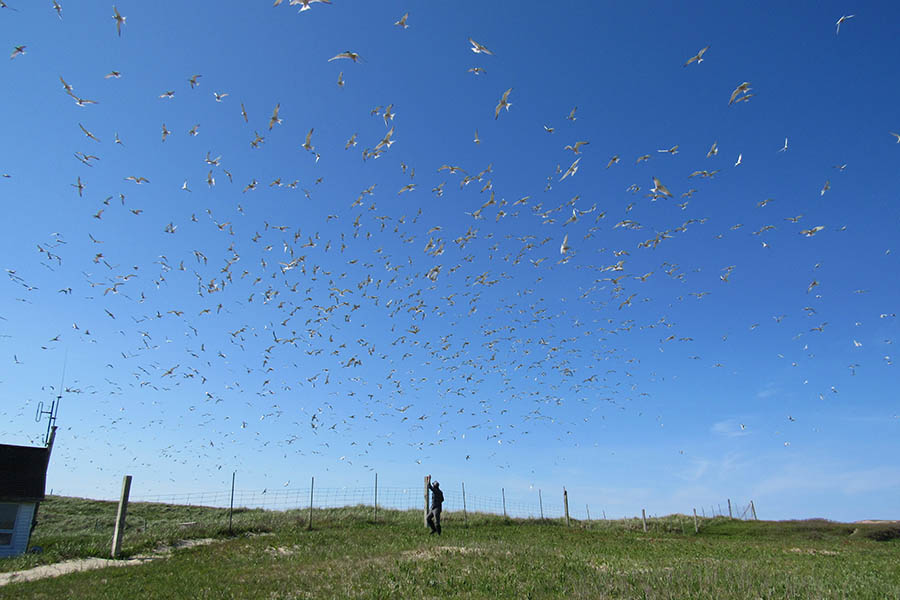
Sable Island has the largest tern colony in Nova Scotia and it is one of the largest breeding sites for terns in Atlantic Canada.
These long-distance migrants arrive on Sable Island at the beginning of May to breed. They remain on the island until mid-August or September and then migrate south to wintering sites. Some individuals may linger to feed and roost on the East and West Spits.
Diet
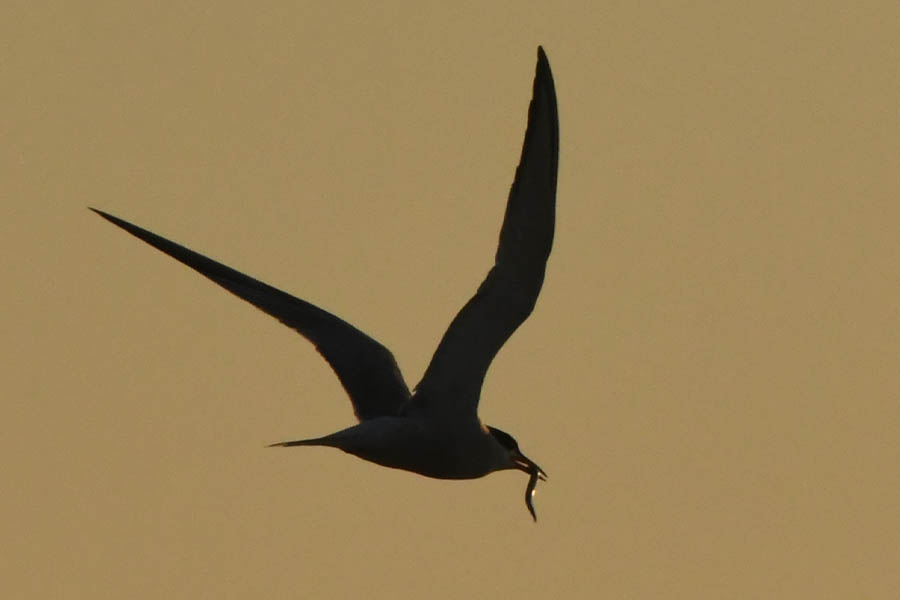
Terns feed primarily on small fish and small marine invertebrates. They also feed on crustaceans and molluscs. Terns will either plunge-dive into the sea for food or steal from other seabirds.
Breeding biology
Terns breed on average once a year, starting around the ages of 3 or 4. Terns will often remain with the same partner for their entire life.
Colonies on Sable Island
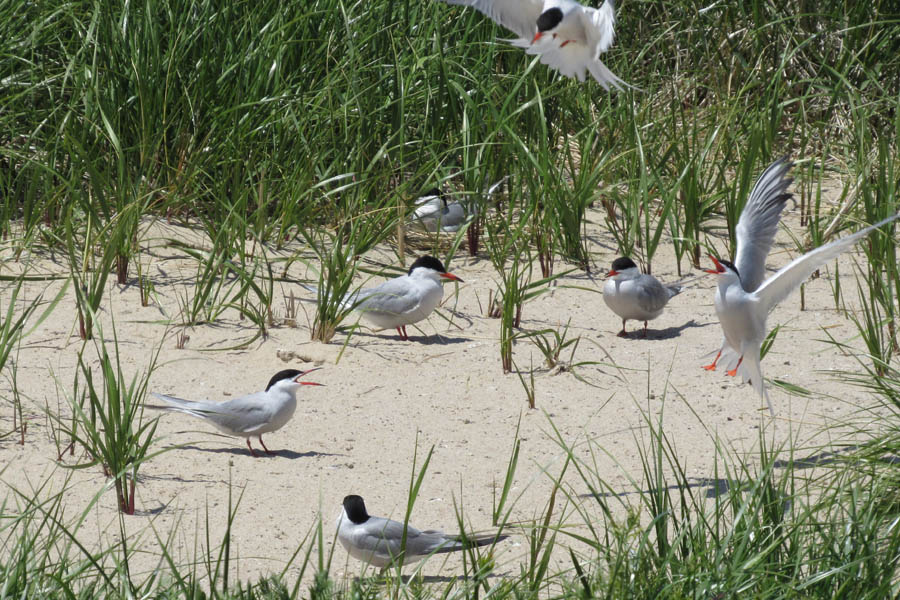
When the terns arrive on Sable Island, they survey the area for potential ground nesting sites and form nesting colonies. The success of a colony site depends on the colony's size, their ability to avoid predation (for example, nesting away from gulls), and their foraging success.
There are two large colonies of Arctic Terns and Common Terns located at Main Station and East Light. In addition, there are smaller colonies scattered across the island whose location and size vary from year to year. A small number of Roseate Terns nest on Sable Island in the East Light tern colony.
Nests
Terns typically colonize grassy swales and low-lying areas, where the ground is stable. On Sable Island, terns nest in less traditional habitat, including heath habitat and dense grasslands.
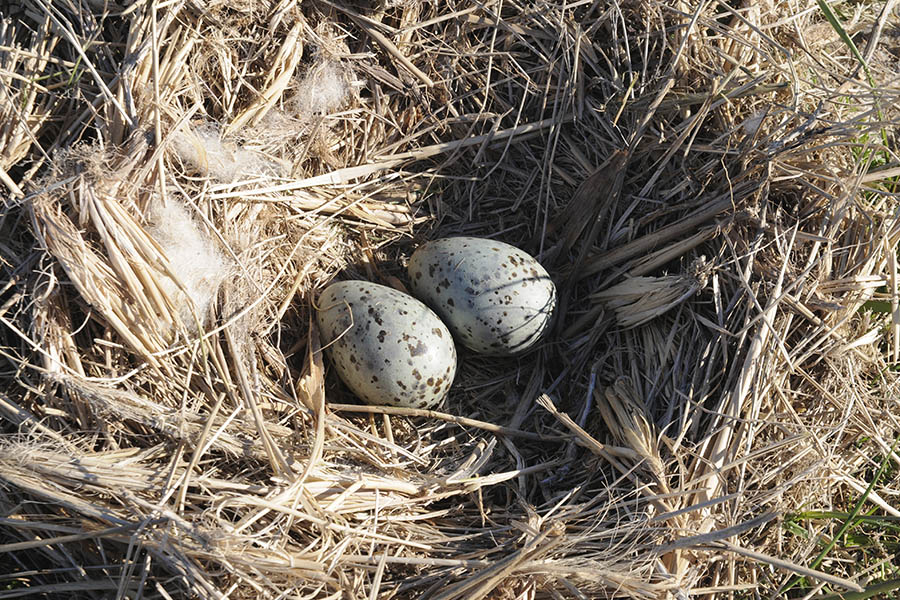
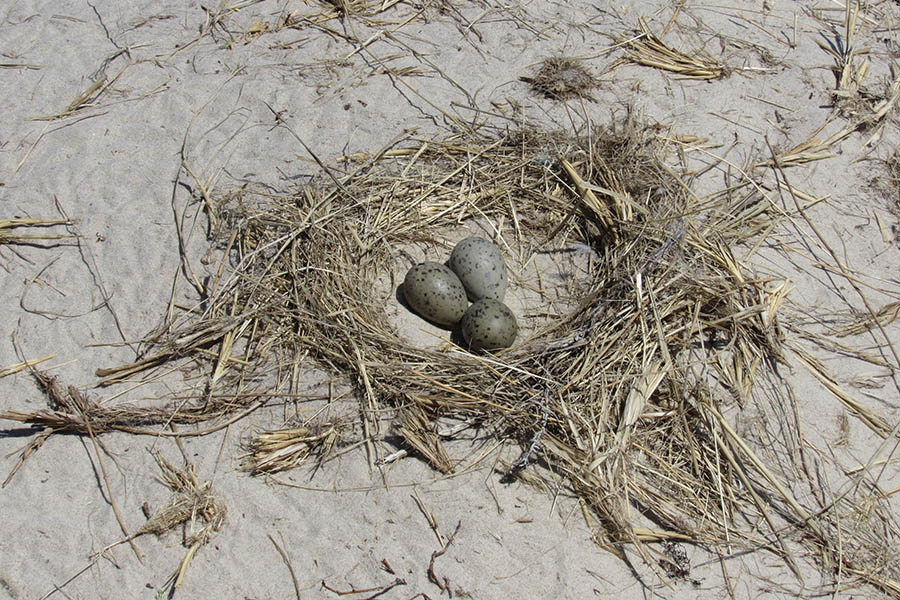
On average, tern nests are 6 cm to 12 cm in diameter and 4 cm in depth. Terns nest on vegetation, sand, or small pebbles. They line their nests with dead vegetation, dried seaweed, feathers, shell fragments, and other washed-up debris.
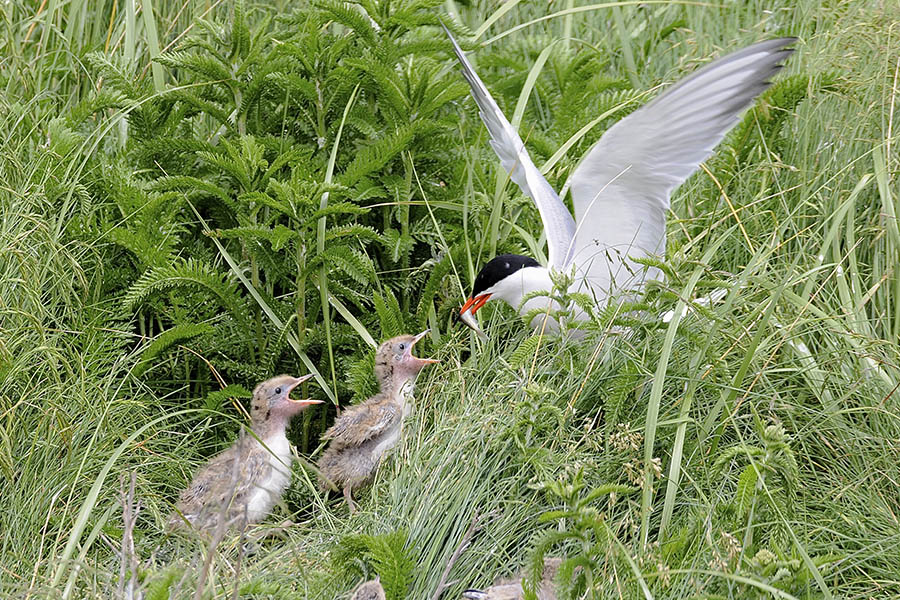
Tern parents can share the duties of incubating the eggs and defending the nest, but typically the female incubates the eggs and the male defends the nest.
Common Terns lay one to four eggs, which are incubated for 22 to 27 days. The nestlings fledge (leave) the nest after 20 to 31 days.
Arctic Terns lay one to three eggs, which are incubated for 21 to 23 days. The nestlings fledge the nest in 21 to 28 days.
Roseate Terns typically lay only one to two eggs, which hatch after approximately 23 days.
Breeding range
Arctic Terns breed in the circumpolar and Atlantic regions of Canada.
Common Terns have a more southern breeding range. They breed in the subarctic from Atlantic Canada to Alberta.
Roseate Terns breed along the coast of Atlantic Canada.
Migration
Arctic Terns and Common Terns are highly migratory birds.
Arctic Terns have the furthest migration of any species in the world! They migrate to the southern hemisphere to overwinter in the Antarctic.
Common Terns migrate south to overwinter in the tropical and subtropical regions of Central and South America.
Watch out for terns!
Transcript
This video has no spoken language.
A flock of terns flying in the sky above.
The sound of many birds in the air.
Government of Canada identifier.
Population fluctuations
Today, Sable Island has one of the largest breeding populations of Arctic Terns and Common Terns in Atlantic Canada.
Historically, Sable Island likely supported even larger colonies of terns. Their eggs served as an important source of food for the early residents and shipwrecked mariners.
Canadian writer Thomas Raddall recalls his experience collecting eggs from tern colonies on Sable Island from April 1921 to May 1922:
At that time terns nested in large numbers, in various “rookeries”. One of these was about a mile east of the wireless station, and presumably near the spot where the Meteorological station now stands, but rather more towards the shore of the lagoon. Most of our food came out of cans, and we gathered tern eggs for a slight change of diet. The method was an old one, as you probably know. To ensure that the eggs were fresh, we removed all eggs from a certain area, and returned to gather new ones. Needless to say, these raids drew the wrath of the entire rookery, screaming and diving at our heads, so that one man had to stand waving a long stick overhead, while another gathered the eggs.
There was another rookery near what was then the west end of the lagoon, a short distance past the old Main Station. I remember this well because of an incident arising out of the wreck of the American schooner Esperanto on the night of May 29, 1921. She foundered on the south side of West point, within easy view of Main Station and the wireless station next morning, with her topmasts showing. (Her crew had been taken off by a companion fishing schooner, the Elsie.) In June the Boston Post sent out a trawler equipped with all kinds of salvage gear, with the notion of getting the Esperanto off “The Graveyard of the Atlantic” and putting her into the International Fishing Schooner races that autumn, to defend the cup which she had won in 1920.
With her came two Boston newspapermen, and they came ashore by boat on June 19th to send their first press messages from the wireless station. They landed right in the tern rookery west of Main Station, and got a fierce reception from the birds. I can remember them complaining humourously about Sable Island hospitality.
Population monitoring
The Sable Island tern populations have been monitored since 1969.
Over the last few decades an interesting shift has occurred. The distribution of terns has become concentrated in just two locations, while many of the other colonies have shrunk to a few individuals or disappeared entirely.
Breeding pairs
The population remained under 2,000 breeding pairs until 2006, and has fluctuated between 2,000 and 10,000 since then. The most recent number of breeding pairs recorded on Sable Island was about approximately 4,400 in 2021.
Roseate Tern population decline
In 1969, approximately 120 Roseate Terns were recorded on Sable Island. By the 1980s, that number had declined to about 15 to 20 breeding pairs.
Their population continued to decline on Sable Island and by 1995, there were fewer than 6 breeding pairs.
In recent years, 3 to 5 breeding pairs of Roseate Terns have been observed on the island.
Species at risk
Roseate Terns are classified as Endangered (vulnerable to extinction) under the federal Species at Risk Act because of their restricted range and low numbers. Common Terns and Arctic Terns have abundant and widespread populations, and are not considered species at risk.
Threats
The initial decline in the worldwide population of Roseate Terns was likely due to exploitation for their plumage.
Roseate Terns have delayed reproductive maturity, small clutch size, and high adult mortality, which restricts population recovery.
Gulls can pose a predation threat to the terns on the island. If there is a high predation rate, terns may abandon their colony and search for a new nesting site. Herring Gulls and Great Black-backed Gulls are the only nesting gull species on Sable Island.
Other potential threats include: major storms, harsh weather, wind and wave exposure, impacts from horses by trampling, or displacement to less favourable or preferable habitats.
Protection and management
Sable Island is an important site for the conservation of Roseate Terns in Atlantic Canada. Parks Canada published the Action Plan for the Roseate Tern (Sterna dougallii) in Canada in 2015.
One of the objectives of the Roseate Tern recovery strategy is to maintain a small peripheral colony of Roseate Terns on Sable Island.
Parks Canada is
- monitoring the Roseate Tern population
- reporting on the progress towards recovery and the effectiveness of management initiatives
- testing methods to improve breeding habitat for Roseate Terns, in collaboration with the Sable Island Institute and the Canadian Wildlife Service
Roseate Terns are also protected in the province of Nova Scotia under the provincial Endangered Species Act.
References
CornellLab All About Birds: Common Tern identification
CornellLab All About Birds: Arctic Tern identification
Government of Canada information about the Roseate Tern
Robert A. Ronconi, Jessica R. Stephens, Zoe J. Crysler, Ingrid L. Pollet, Danielle T. Fife, Andrew G. Horn, and Philip D. Taylor "Distribution, Abundance and Trends of Gulls and Terns Breeding on Sable Island, Nova Scotia, Canada," Waterbirds 39(sp1), 44-56, (1 April 2016). https://doi.org/10.1675/063.039.sp111
Image gallery
Related links
- Date modified :