
How does this year compare to previous years?
Wood Buffalo National Park
At Moose Island crossing, ice stopped moving and froze on November 27. This is later than the usual freeze-up, which normally happens around November 16 or 17. The delay is likely caused by warmer early-season temperatures that slowed ice formation.
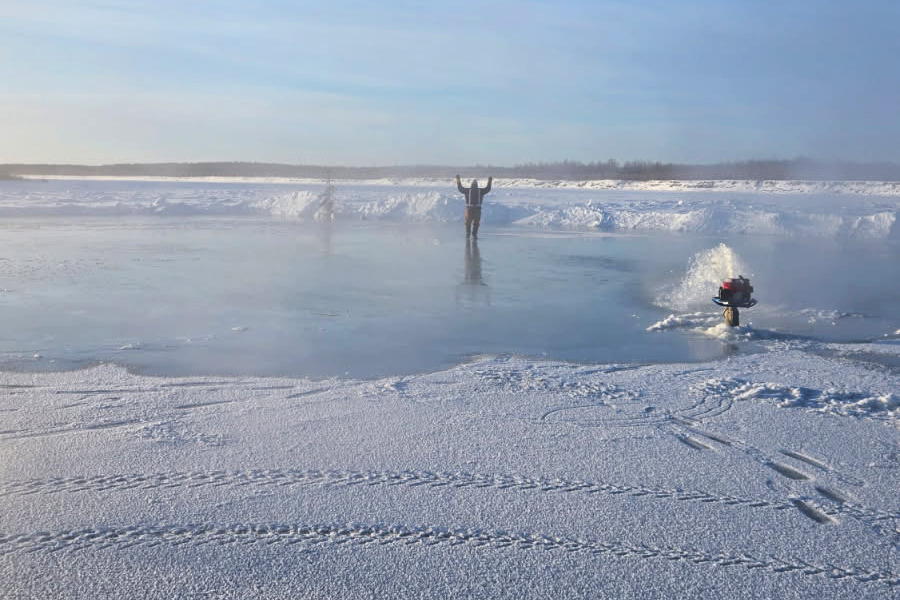
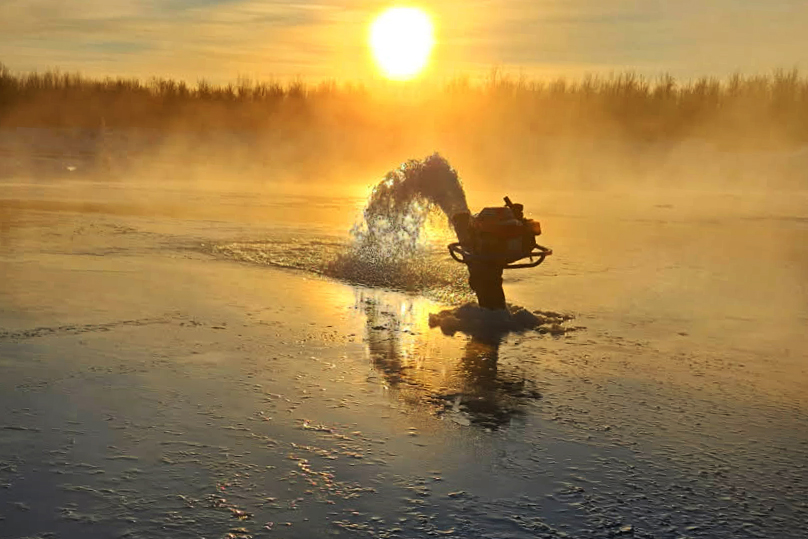
By December 3, the ice reached about 5 inches, enough for crews to begin flooding operations. Flooding a frozen river to build a winter road is a demanding process. Crews pump water onto the ice in layers, letting each layer freeze before adding more. This work often happens in extreme cold – recent temperatures at Moose Island have been around -38c. The Parks Canada team also must check the ice constantly to make sure it’s strong, safe and able to hold traffic.
The next goal is an ice thickness of 18 inches, which is needed before the road can open to light traffic. Crews will continue building up the ice and checking conditions, ensuring the route meets safety standards.
For travelers, this later freeze-up means winter road access will begin later than usual. Drivers should plan accordingly, monitor official updates via the Parks Canada Winter Road Hotline on 1-867-872-7962 . Road users should not use the road until it is officially open - early travel can be dangerous and can damage the ice, delaying the opening.
- Date modified :