
Photography and Drone Permitting
Nahanni National Park Reserve
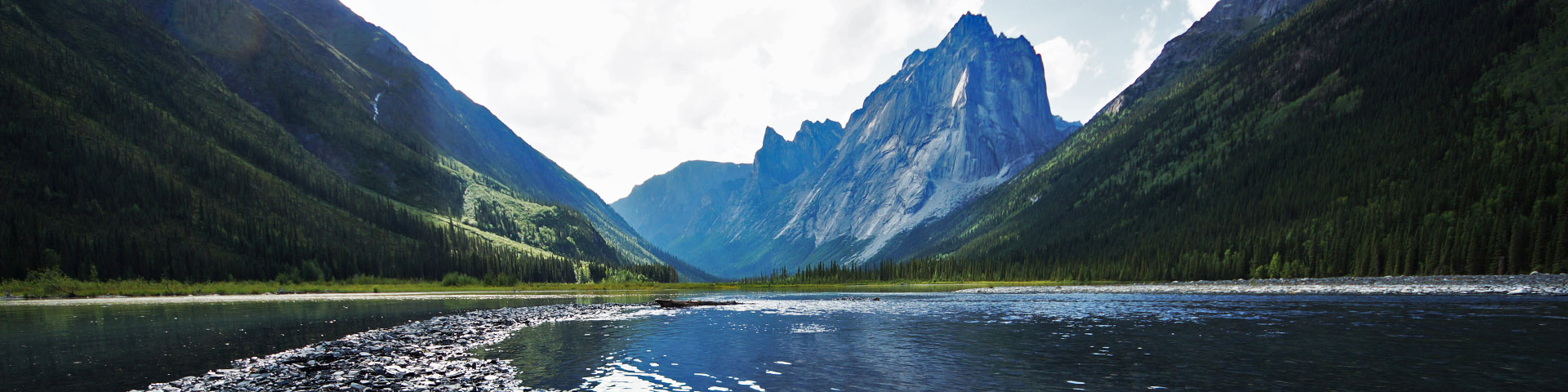
Nahanni National Park Reserve is Canada’s first UNESCO World Heritage Site and one of the country’s most remote, powerful, and culturally significant mountain regions.
Known for its sweeping canyons, thundering river corridors, and the history and culture of the Dene, Nahanni has long inspired filmmakers, photographers, and audio storytellers looking to work in a place where landscape and narrative carry equal weight.
All commercial photography and video projects, both profit and not-for-profit and regardless of scale, must be reviewed and permitted.
Photography and video captured for personal, non-commercial use does not require an application or permit. However, personal recreational use of drones of all sizes is strictly prohibited. This prohibition includes small drones under 250g.
Parks Canada reserves the right to determine whether an end product results in personal or commercial gain. If you are unclear about whether you need a permit or not, please reach out for further discussion.
Download Film and Photography Permit Application
- Works that accurately reflect the park’s authentic stories
- Storytelling rooted in cultural or ecological significance
- Projects highlighting biodiversity and conservation
- Content that features Indigenous voices, histories, and perspectives
- How can your project benefit from including Indigenous voices and perspectives?
- How will you include the communities of Fort Simpson and Nahanni Butte in your project?
- Will your project offer economic benefit to local communities? Is there potential for skills development or work experience for Indigenous youth?
- Have you completed research on Dene history and culture, including local place names?
- Do you have the community’s consent and approval for your project?
Before you apply
Familiarize yourself with the Nahanni National Park Reserve of Canada Management Plan
Consider how your project aligns with the vision and mandate of Nahanni National Park Reserve. Parks Canada is supportive of:
Community Consultation and Engagement
Applicants are strongly encouraged to speak with the Nahʔa Dehé Dene Band and Dehcho First Nations early in the application process. An application will not be considered complete without demonstration of prior engagement and relationship building.
Things to consider:
The application process
All film and photography applications are reviewed jointly by Parks Canada and the Nahʔa Dehé Consensus Team. This partnership ensures that all creative work honors the land, its stories, and the communities who continue to steward it.
Because of this vital review process, the annual application deadline is January 31st of the year the project is planned in.
Applications are assessed against Canada's National Parks Act, National Parks General Regulations and the project’s potential contribution to public awareness, appreciation and understanding of Canada’s national parks and Parks Canada.
In addition, preliminary screenings are required under the Mackenzie Valley Resource Management Act for all commercial film and photography projects, to assess any project impacts. Film, photography and drone/UAV use applications take a substantial amount of time to process. Making contact with Parks Canada about your film project early is always highly recommended.
How to apply
For your reference and to help you prepare your proposal, please consult the Essence of Nahanni statement and the Cultural History of the park.
Film permitting at Nahanni National Park Reserve generally follows this process:
1. Begin communication with Nahʔa Dehé Dene Band and the Dehcho First Nations early in the planning process
2. Complete a Film and Photography Permit Application form and submit with all required documents before January 31st.
3. Your application is reviewed by the Nahʔa Dehé Consensus Team and Nahanni National Park Reserve’s management team. The applicant may be invited to present their project to the Consensus Team.
4. The film proposal may be subject to a preliminary screening as per requirements of the Mackenzie Valley Resource Management Act. A preliminary screening is a minimum of 45 days turnaround time.
5. Following the regulatory process and consultation, a decision is made. Declined applications end the process. Approved applications proceed to permitting.
6. Regardless of project scale, the applicant must obtain proof of comprehensive liability insurance with a minimum coverage of $2 million.
7. If approved, the permit documentation is delivered for signature by all parties once fees are paid in full.
8. The Superintendent approves the permit, signs and returns copies to the applicant.
Please be sure to follow all park regulations while photographing or filming in the Parks Canada places. Consult the guide to film/photo shoots at Parks Canada.
Insurance
Proof of comprehensive liability insurance policy must be received by Parks Canada in order for your application to be completed. It is not necessary to submit insurance when you submit your application. However, it is required before a permit will be issued.
"His Majesty the King, in Right of Canada, as represented by the Minister of Environment for the purpose of the Parks Canada Agency" must be named as one of the additional insured parties in the submitted insurance certificate.
Please note that a non-refundable application fee may apply. Fees are assessed based on the scope, location and crew size associated with the project. Discounts may apply once the nature of the proposal has been evaluated.
Further information regarding Insurance and Fees can be found on your Request Form.
Aerial filming
Recreational drone use in Nahanni National Park Reserve is prohibited. Operating a drone within park boundaries may result in law enforcement action and a fine of up to $25,000.
Photographers and film makers must be aware that the use of Unmanned Air Vehicles (UAVs or drones) in national parks is a restricted activity that requires the permission of the Field Unit Superintendent in addition to a film permit and any Transport Canada requirements.
A Transport Canada Special Flight Operations Certificate (SFOC) and a Transport Canada Pilot Certificate - advanced operations, are required to operate a UAV within 5km of Náįlįcho (Virginia Falls) because it is an aerodrome. Other locations in the park still require a Transport Canada issued Pilot Certificate - basic operations.
For both basic or advanced operations, these documents must be submitted before your application can be reviewed.
To consider if requesting a film or photography drone/UAV permit:
1. You need a film permit to use a drone in Nahanni National Park Reserve in any capacity. All of the above listed film permit requirements apply.
2. You need a license issued by Transport Canada and must have your drone registered. Exceptions for registration may be made if your drone is under 250g, but a drone permit is always required.
3. When planning projects that could involve UAVs, choose methods and equipment with the lowest potential for disturbance. Consider:
a. ground-based alternatives to UAV use;
b. the duration of activity - keep UAV use as short as possible;
c. the size of equipment and the amount of noise it produces - favour low-noise equipment;
d. all potential effects on soundscape and viewscapes;
e. local wind conditions and environment that may affect safety, footage quality, and wildlife impact.
If a drone/UAV permit is issued to you, you must:
1. Follow all Transport Canada Drone/UAV rules and regulations.
2. Give way to manned aircraft at all times and cease aerial operations immediately if there are any indications that manned aircraft are approaching the vicinity.
3. Do not buzz, harass, or deliberately fly in a manner that disturbs visitors or invades privacy.
4. As required by Transport Canada, operate within the Visual Line of Sight (VLOS) at all times during the flight and use a spotter to watch for wildlife entering the designated flight area.
5. Maintain a minimum separation of 500 meters vertical and 500 meters horizontal between the aircraft and wildlife. If any species of bird or animal are observed within or approaching the boundaries of the flight area, cease operations. Be aware that although wildlife may not demonstrate obvious signs of disturbance, they may still be under significant stress from the presence of an UAV.
6. Birds may be the most sensitive species group to UAV operations. If operating in the bird nesting window (April 1 to August 31), maintain the highest altitude possible and avoid sporadic flight movements and other trajectories that could be perceived as threatening. Some birds may exhibit territorial behaviour. If any dive bombing, mobbing, vocal displays or other form of interaction with the UAV occurs, cease operations immediately.
7. If raptors in flight are observed within 1 km of drone activities, cease operations.
Your permit may contain additional conditions that you need to follow. If you are requesting to use a drone for scientific research purposes, there is a different application process. Please reach out to nahanni.info@pc.gc.ca for more information.
For filming in the Northwest Territories outside of Nahanni National Park, please follow the guidelines provided by the Government of Northwest Territories Film Commission.
Useful Links:
National Parks of Canada Aircraft Access Regulations
- Small projects involving minimal equipment and crew sizes smaller than 15
- Minimal impact to the ecosystem and minimal disruption to park users
- Projects requiring minimal shooting time and assistance
- Educational projects contributing to park objectives, messages and themes
- Activities that may damage the ecosystem or disrupt and manipulate wildlife
- Use of motorized watercraft or off-road vehicles such as quads and snowmobiles
- Low-level flying or landing of aircraft without a permit
- Portraying activities that are illegal or incompatible with Parks Canada and the Consensus Team’s message
FAQ
When’s the best time to film/take photos in the Park?
Summer is the best time for filming. July and August are the busiest visitor months. Filming should not interfere with visitor enjoyment. Our staff will have the best information about visitor use and locations to support your filming objectives. Landing in the park is not easily done in the winter or early spring. Float plane access in the summer is the most common way to access the park.
How can Parks Canada help?
Parks Canada can answer questions and develop ideas to help you make the best decisions for your project proposal including logistics, weather, contingencies and local context.
Where are the best places to film/take photos in the park?
Places that are already designated landing sites are better filming locations. These places include: Náįlįcho (Virginia Falls), Gahnįhthah Mįe (Rabbitkettle Lake), Bunny Bar, Islands Lakes, Honeymoon Lake, Seaplane Lake, and Glacier Lake. Other areas may be considered on a case by case basis.
What if I’m filming outside of the park?
For filming in the Northwest Territories other than in the National Parks of Canada, please follow the guidelines provided by Northwest Territories Tourism and the Northwest Territories Film Commission.
What are the rules surrounding drones in national parks?
Unmanned aerial vehicles (UAVs or drones) are increasingly popular with hobbyists, photographers, and businesses, but their use is strictly controlled in national parks. Recreational drone use, for all sizes of drones, is strictly prohibited. If you witness someone using a drone/UAV and you would like to report it, please call the Duty Officer at 867-695-6572.
Are there fees for filming/photography?
Yes, though the rates change depending on the size/type of project. We are happy to provide this information when you submit your project proposal.
What kind of insurance do I need?
The minimum insurance requirement is $2 million in general liability. "His Majesty the King, in Right of Canada, as represented by the Minister of Environment for the purpose of the Parks Canada Agency" must be named as one of the additional insured parties in the submitted insurance certificate.
It is not necessary to submit insurance when you submit your application. However, it is required before a permit will be issued.
What are the best practices for filming/photos in Nahanni National Park Reserve?
What Works Well
What Won’t Work
- Date modified :